
Monday, Jun 30, 2025 |
Did you know that in order to have a healthy mind, you need to be curious? It’s as important to mental health as proper nutrition is to physical health. Curiosity is mind-fuel. It stimulates cognitive and emotional growth. Learning and experiencing new stuff make your brain function better, sharpens your memory, and increases your creativity! The best way to overcome challenges and foster resilience is to nurture a curious mindset. My extraordinary friend, Jeane Slone’s curiosity led her on a fascinating journey of discovery, ignited by a gift of a laptop and her mother’s thick blue, tattered scrapbook. Soon, Jeane forgot that selling her business meant she retired and was ‘supposed to’ kick back and relax.
Jeane grew up knowing that both her parents served in WWII, but they never shared their stories. Her mom’s career as a colonel’s admin was cut short when her pregnancy was discovered. Mom spent the rest of the war wistfully clipping news about women in service. Fifty years later, when Jeane was flipping through her mom’s enormous scrapbook, a 2-inch clipping about the Women Airforce Service Pilots (WASPs) caught her eye. That small piece of paper sparked her curiosity and started her next career. Jeane set out to learn everything about women’s roles in WWII, from building ships to flying bombers, being a reporter, a spy, and how the experiences of combat nurses varied because of their race.
New connections
Jeane’s first discovery was that her neighbor, Florence Wheeler, 87, a retired home economics teacher, was a former WASP. With Florence’s help, Jeane interviewed six WASP pilots in their 80s during a bustling, crowded local veterans gathering. She learned that 1074 brave women flew over seventy-seven different types of planes within the U.S., and sadly, thirty-eight of them died in service. Jeane quickly joined the Healdsburg Literary Guild and the Pacific Coast Air Museum to learn more. Her passion to understand what it felt like to be ‘Rosie the Riveter’ inspired her to participate in a Rosie the Riveter Look-Alike contest.
New Adventures
Jeane’s curiosity and desire for historical accuracy gave her the courage to don a helmet and goggles and climb into an 89-year-old 1941 Stearman Jenny. She was surprised when loop-de-loops and upside-down acrobatics became part of the adventure. The next trip was on a 1918 fabric-and-wood open cockpit Curtiss Jenny. Intrepid Jeane wanted to experience what it was like to fly in an open cockpit, soaring into the clouds with the wind across her face. She felt free as a bird, although the clack, clack, clacking sound of the old plane reminded her that this vintage bird was feeling its age! Jeane gained firsthand understanding of the grit and drive required by these brave women pilots. Next up, a girl has to skydive to know what it feels like to be dropped behind enemy lines as a spy, right?
New Light
Thanks to Jeane, a new perspective shines on the overlooked women of the 1940s who played a vital role in America’s involvement in WWII. Click Here to learn more about She Built Ships, She Flew Bombers, She was an American Spy, She was a WWII Photographer Behind Enemy Lines, and She was an American Combat Nurse during WWII. Click Here to enjoy Jeane’s blog.
Today, in her early 70s, since Jeane’s voice difficulties prevent her from giving lectures and presentations, she sells local authors’ books at the weekly farmer’s market. Why? Because she occasionally gets to hear a fascinating story, and who knows? Maybe the next one will spark another irresistible quest of discovery.
Curiosity not only improves our lives; it also connects us, enriches our communities, and uncovers new paths. It’s a superpower waiting to be nurtured. Take that risk! Embrace your curious spirit and go on an adventure!
by Lori Pappas
Thursday, Jun 19, 2025 |
After my adventures flying in the WW One Curtiss Jenny and aerobatics in the 1941 Stearman I caught the “flying bug” and at age 55 when had retired and was determined to learn how to pilot an airplane to enhance my writing of She Flew Bombers.
I found flying lessons in the yellow pages at Dragon Aviation at the local airport and took my handy-dandy clipboard and camera and headed out to Dragon Fly Aviation. In the tiny-cluttered building I met the owner, Bob Archibald, a former U.S. Air Force pilot with service in both the Korean and Vietnam wars.
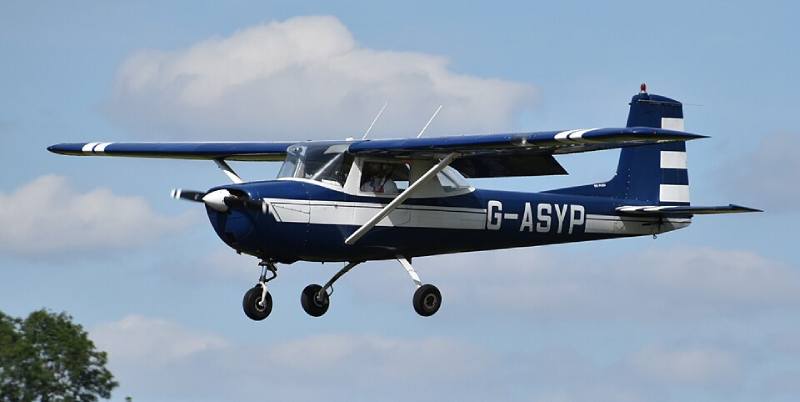
Bob was a friendly talkative man, and I took notes as he chatted away. He founded Dragonfly Aviation school in 1981 which offered a range of flight training services. I signed up for just one costly one-hour lesson of a hundred dollars. The following week I met with my instructor, a good-looking young man who brought me out to the tarmac to board his plane. It was a small Cessna 150E and was so cute in size as compared to the large Stearman and the long Jenny.
This pilot was in love with flying and talked non-stop as I got in the side-by-side passenger seat. Up we went as I was filled with butterflies during the ascension but once we leveled off, I was enchanted by the beautiful scenery of Sonoma County as vineyards and a long windy river floated below me.
The instructor pointed and named each control and its functions. I became so distracted by the scenery below me that I couldn’t remember what the pilot said, nor could I take any notes! The short hour flew by as we landed back at Dragonfly. I shook hands with the pilot who said, “Hope to give you another lesson soon.” Once home my mind reviewed the amazing experience but realized I learned absolutely nothing! I calculated that to become a pilot I had to pay for 20 hours of flight training with an instructor then perform 10 hours of solo flights. The amount of money this would cost did not set well with me plus if I became a pilot, I certainly couldn’t afford to buy an airplane or even rent one! Still feeling bitten by the aviation bug, I fantasized about joining the Air Force then I could learn to fly for free. This naïve thought was a short-lived as I was over the age limit of 42 years old.
Thankful for the one flying lesson I worked longer hours to complete the She Flew Bombers manuscript. I called up my editor as I neared the finishing line and she told me that I needed an experienced pilot go over all the flying parts for accuracy before she could edit it for grammar, coherence, chapter and bibliography organization.
A light bulb went off and I immediately contacted former WASP Florence Wheeler, pilot instructor, and asked if she could edit the flying sections of the manuscript.
Stay Tuned, Next Time: The amazing Florence Wheeler, Editing She Flew Bombers
Wednesday, Jun 11, 2025 |
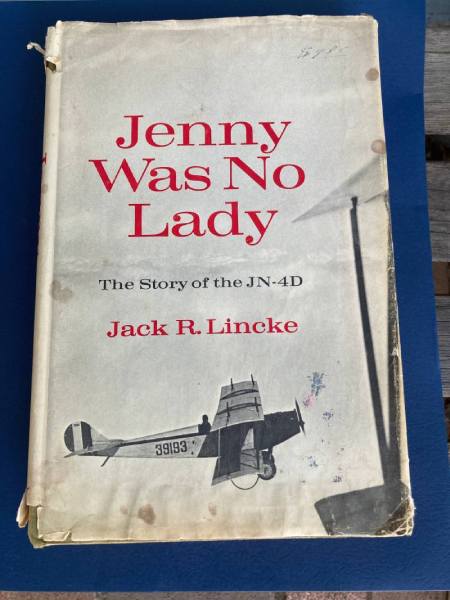
To further enhance my adventures to finish my manuscript, “She Flew Bombers” I was able to locate a used old book about an antique airplane titled: “Jenny Was No Lady” subtitle: “The Story of the JN-4D” by Jack R. Lincke, copyright: 1970. It was a fun, well-written, exciting book!
The author, Jack Lincke learned how to fly and perform aerobatics on the “Jenny” at the Missouri Kemper Military School at the age of fifteen.
He wrote that he was “hooked” on her and ended up buying one as a young man.
Jack took a three-day 1500-mile trip in his Jenny with a friend who had a ranch in Whitehall, Wyoming.
He flew it from pasture to pasture and would land close enough to garages to get gasoline to keep on traveling. They would sleep over night under the Jenny’s wing!
As they were close to their final destination the horizon turned an ominous black in a dust storm. Jack ended up whirling in the storm as the controls began to bite and he tried to land it in a pasture but flew through a fence and smack into a stack of alfalfa. He could hardly breath and was stuck in the hay. His friend was able to crawl out and went to his barn then hooked up a team of horses and pulled the airplane out.
The Jenny was totally wrecked, and he sold the engine to pay for a ticket home!
What a super awesome story this was to read!
• The Curtiss Jenny was the first and most used, mass-produced airplane during World War One from 1914-1918. Over 6,000 Jenny variants were sold as postwar surplus airplanes.
• It was not used in combat roles by the U.S. military during the war but trained most of the U.S. and Canadian pilots who served.
• It was known for being relatively easy to fly and maintain—ideal for students
Next time: My First Flying Lesson
Tuesday, Jun 3, 2025 |
One early morning, the phone rang, A man asked if I wanted to go up in Frank Schelling’s Jenny. With apprehension I answered, “Today?”
He said, “Frank only flies the Jenny once a year, if you want to go you’ll need to be at the airport before 8 AM.” The scary flight in the 1941 Stearman crossed my mind, but I bravely said, “OK, I’ll be there.” I threw on some clothes then phoned up my best friend of 30 years, Sivani, I asked if she could take photos of me flying in the Jenny. She enthusiastically said, “Sure that’s so cool you get to fly in one!” I sped 80 mile an hour to the airport while looking cautiously for the CHP. I got there just in time and there was my best friend of 30 years, Sivani, with her big, dimpled smile waiting to share the new adventure with me.
We joined a small crowd of men to watch the yearly launch of the Jenny. A handsome young man came up to me and asked, “Are you ready to go up?” I replied, “I think so.” He said, “I’ll help you in the Jenny, I’m the pilot, names Robin Reid.” With a shaky voice I replied, “Isn’t Frank the pilot?” “He doesn’t have a commercial license like I do.” He scanned my distraught face saying, “No need to worry, I fly commercial Boeing 747 airplanes out of the Reid-Hillview Airport in San Jose. I’ll give you a very safe flight.”
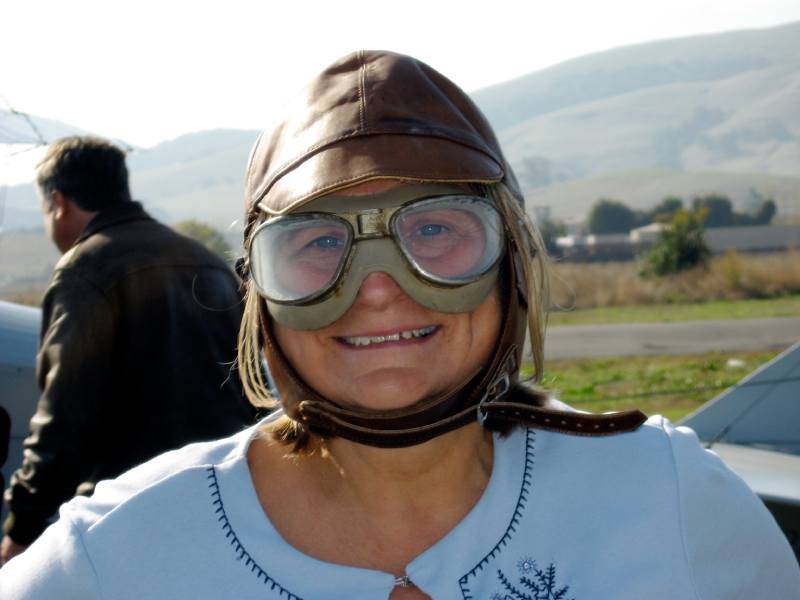
I calculated that the Jenny was an 89-year-old airplane. Did I have the guts to follow through with this? Pilot Robin gave me a helmet and goggles to put on as he helped me into the cockpit of the Jenny. Frank turned the propeller and up we went. It was heavenly as we soared across the patch-work land and up into the clouds as the wind drifted joyfully in my face. I felt free as a bird. The Clack, Clack, Clacking sound it made that brought the reality of how old this plane really was.
The flight was too short as I fell deeply in love with the Jenny. Much to our surprise, the pilot asked Sivani if she wanted a flight in the Jenny. She exuberantly agreed. Once the Jenny was airborne, I saw there was another small airplane that followed it. After another person went up Frank announced that the rides were over due to not enough gas! After both planes landed, I asked about the second airplane and was introduced to the pilot, Roger Cain. Roger told me he was a professional aerial photographer based in San Francisco and conducts air-to air photo shoots from his vintage aircraft. I told him I was writing a manuscript about the Women Airforce Service Pilots, and he said he would send me the photos he had just taken of the Jenny!

You can see his photo on the cover of She Flew Bombers.
Before I left to go home, Frank proudly told me there were only 10 Jenny’s in the world that were still airborne. It dawned on me that I had just experienced an amazing once in the lifetime event.
If you’re interested in viewing more of Roger Cain’s aerial photography, you can explore his photo gallery here!
Next Time: A Motorless Flight With my Amazing, Adventurous sidekick