Florence Wheeler Former WASP Teaches the Link Trainer
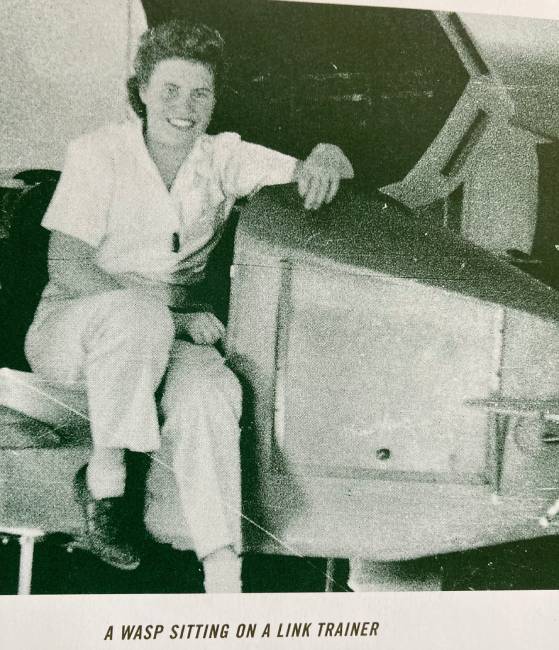
The next week during the editing process of She Flew Bombers, WASP Florence Wheeler brought in a photograph of her proudly sitting atop link trainer that she was qualified to teach and test the required 19 hours of practice to all the WASP gals on the army base.
Passing the test and safely practicing in the link trainer was a qualification before the gals could fly the “biggies” like fighter, bomber, and transport aircraft.
This amazing small box mechanical simulator airplane had stubby little wings and a tail and never left the ground. The training pilot goes inside the link trainer with a covered black hooded canvas that blocks her vision and learns to hunt for the controls by touch only.
The astonishing link trainer (invented in 1920) simulated flying under any harsh conditions teaching a WASP what controls to use.
Instructor WASP Wheeler with a headset on sat at the large map table that was connected to the link trainer by electrical cables or hoses. Florence traced the student’s “flight path” by a mechanical arm or ink plotter from the table. She gave verbal commands to the training pilot who also had earphones on. Wheeler controlled the turbulence, or wind force in any direction and the fuel gauge.
Newbie pilots learned how to navigate the plane’s instruments as Florence gave instructions such as unlock controls, push rudder and thrust stick. The movable base had pumps on it and simulated pitch, roll and yaw of a plane and would tilt and rotate the cockpit. Trusting blindly in the instruments was crucial to learn in emergency situations. Students called it a “claustrophobic torture chamber!”
The amazing link trainer taught safe instrument flying without risking real aircraft, saved fuel and reduced crash risks during training. It prepared thousands of WW II pilots for emergency blind-flying conditions.
During World War II, 38 Women Airforce Service Pilots (WASPs) died in the line of duty while serving their country and were never in combat nor left the United States. The primary cause of death for the pilots was flying over 77 types of aircrafts in which the accidents were caused by mechanical failure, weather-relate crashes, pilot error, mid-air collisions, and training accidents, and ferrying new aircraft from the factories where the planes were often untested! Some women died during takeoffs or landings. Others went down in storms or experienced mechanical failures over remote terrain. Sometimes there were over 50 pilots practicing in one air space!
Cornelias Fort, 24 years old was the first female WASP pilot to die on active duty and perished in a mid-air collision while ferrying an airplane.
Because the female pilots were paid by civil service, the military did not pay for their funeral services and their families had to pay to ship their bodies home.
It wasn’t until 1977 that the U.S. Congress granted the WASPs veteran status. The WASPs were awarded the Congressional Gold Medal for their service.
Florence Wheeler went to Washington, DC with her son to receive the Congressional Gold Medal for her service.
It took until May 20, 2016 to grant the WASPs military status to be buried in Arlington Cemetery.
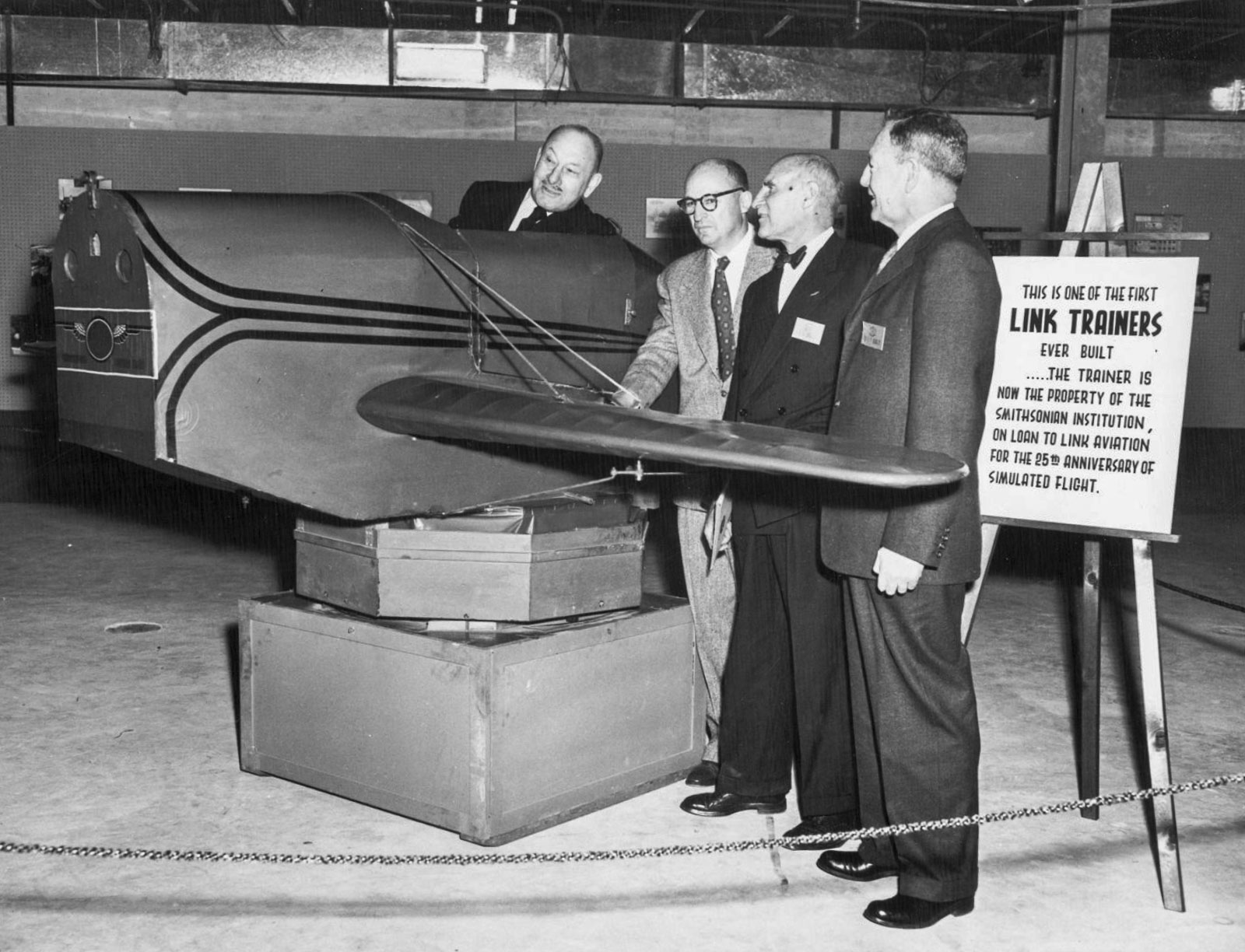
Edwin Albert Link, Jr. (in glasses) with the oldest surviving Link Flight Trainer (serial number 3) on the 25th anniversary of the prototype’s first ‘flight’. This example survives in storage with the Smithsonian’s National Air & Space Museum. (image via Binghamton University Library)

Chanute_Field_Link_Trainers_1943