Friday, Sep 5, 2025 |
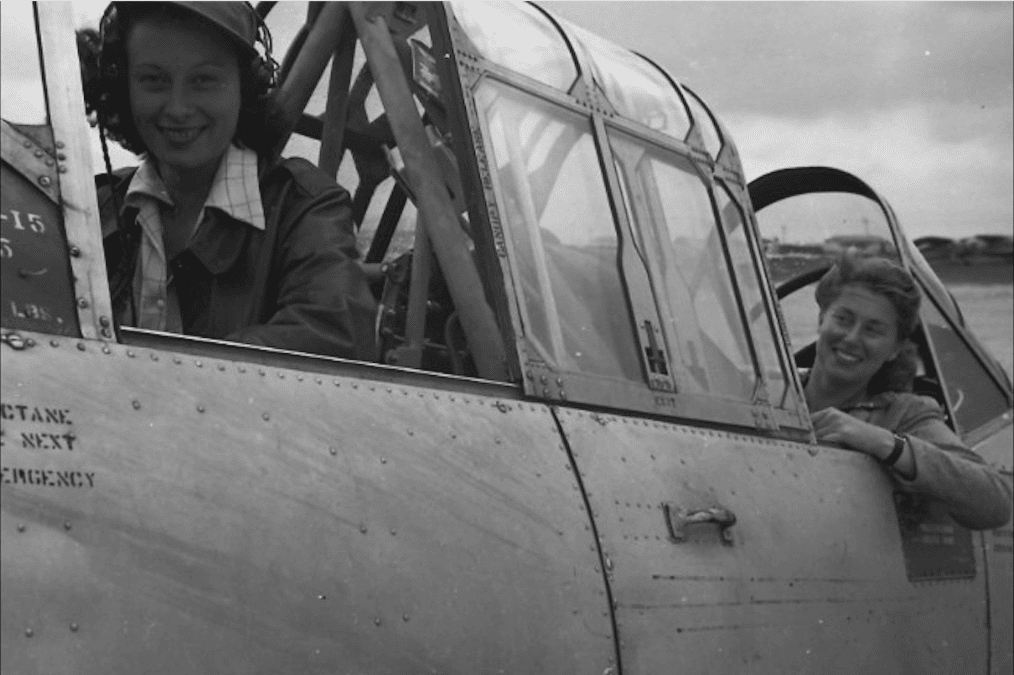
The interview at the standing room only event at the Santa Rosa vets building with pioneer aviator Betty June Deuser-Budde Class 43-3 at age 89 is a real hoot!
Please enjoy her stories as a WASP.
“I became fascinated with airplanes as a young girl when my father often took my family out to the local airport in Alameda, CA to watch the airplanes take off and land.”
“In 1941, I earned my private pilot’s license thanks to a scholarship awarded by the Oakland Chamber of Commerce. I trained at an airport in Concord, California and obtained 50 logged in hours.”
“I joined the third class of WASPs in January 1943 in Sweetwater, Texas. After graduating I was one of only three WASPs who were called to Washington, DC to meet with Director of the WASPs Jacqueline Cochran and General Hap Arnold. We were told that we were not going to be ferrying planes, and were reassigned to Camp Davis, NC to be the first group to tow targets for anti-aircraft troop training.”
“We flew the planes from the front cockpit while an enlisted man sat in the rear cockpit to control reeling out the 36-foot target sleeve behind the plane. We would wait for direction from “Sugar Charley”, the ground control officer, and fly back and forth perpendicular to the artillery range to allow the gunners the opportunity to hit the target behind the aircraft. This could go on for hours with occasional changes in altitude to accommodate the firing from the ground of many different weapons including machine guns and 90 MM cannons at our target sleeve!”
“One of my baymates, 26-year-old Mabel Rawlinson died as her plane crashed during a night training flight at Camp Davis. She was one of 38 WASPs who died during the war.
A second WASP at the Camp had her plane crack up after landing. It made me sick to think of both deaths.”
In September 1943, I joined a secret radio-control program flying PQ-8 drone-targets and assisted with aircraft modifications, such as installing override systems for pilot safety. The PQs were used for targets, and we learned to fly them remotely.
During one of my test flights, the pilotless radio-controlled PQ-8, was hit by shrapnel but continued to fly. I lost control of it, and it eventually crashed. A farmer saw the crash and organized a search party to look for the pilot. Of course, they never found one!
I also logged time with the A-24 Douglas dive bomber, A-25 Curtiss Helldiver, B-34 Lockheed bomber and various Beechcraft ATs. I learned to fly a variety of aircraft including the PT-19, BT-13, BT-14, AT-6, PQ-8, and UC-78.” The audience had a look of amazement as Betty quickly rattled of all the aircraft.
The Women Airforce Service Pilots (WASPs) were unhappily disbanded on December 20, 1944. This was eight months before the official end of World War II. We had to make way for returning male pilots.
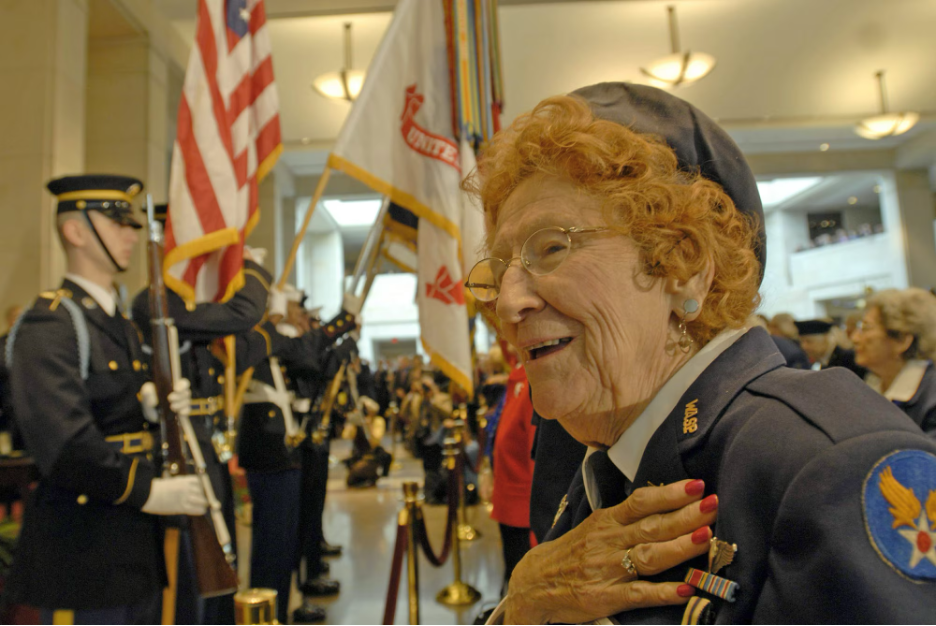
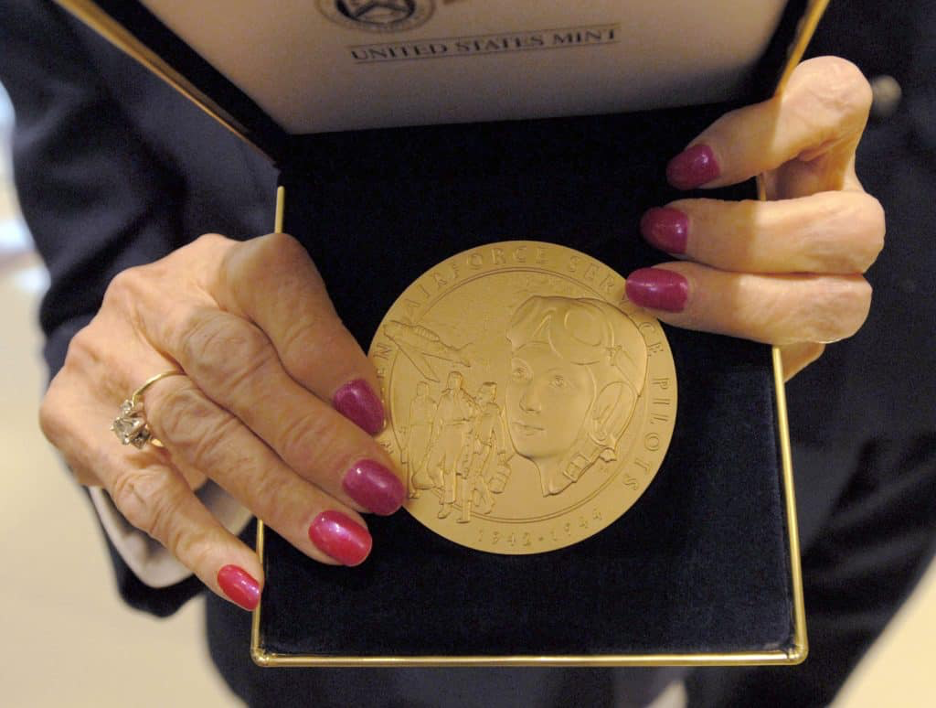
I was one of only 180 WASPs who went to the capitol in Washington, DC for a ceremony to receive the Congressional gold medal of honor we wore our WWII uniforms. There were only 300 living out of 1,078 at the time.”
Applause was heard from the audience.
Betty June Deuser-Budde Class 43-3 was born on 8/15/1920 and died at the age of 94 on 10/13/2014
Thursday, Aug 28, 2025 |
The second presentation of former WASP Florence Emig Wheeler at the Santa Rosa Veterans building was very comforting for me. It was wonderful to have her on the panel as she had edited my book, She Flew Bombers. I introduced her saying, she was born on April 6, 1922 in Santa Clara, California, to William J. Emig the sheriff of Santa Clara County.
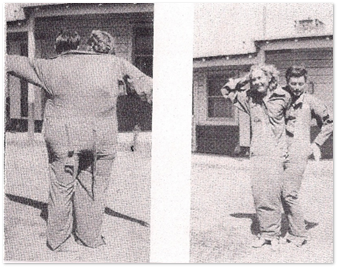
Florence spoke with enthusiasm, “My interest in flying was sparked when my father encouraged me to join the San Jose State College flying club in 1940. Before I went into the service, I was a flight instructor in Reno, Nevada and Alturas, CA where five of my students were accepted into the WASPs, I felt very proud of that accomplishment. I joined the last class of WASPs in Sweet Water, Texas in 1944. I arrived on the base, and I was overwhelmed as well as excited to see the many beautiful, tanned WASPs marching two by two to training classes wearing tan slacks and white shirts instead the first issued surplus GI size 44 mechanic uniforms which had to be rolled up and fasten by a belt to fit.
One of my assignments to graduate from the Sweetwater training classes was a timed cross-country flight. I climbed up to 5,000 feet from Garden City, Kansas and was to land in Lincoln, Nebraska. Well, I was a California girl and was used to flying in a state that had marvelous mountains, valleys and hills which were easy markers to show where I was.
I flew from Texas to Kansas and became completely lost! Here I was as an accomplished pilot and instructor with 1,500 hours logged hours and I never got lost! Kansas is completely flat with no obvious markers. At last, I saw a railroad down below and I immediately flew down to read the railway station sign which told me where I was!” Laughter erupted from the audience.
Florence continued, “Fortunately, I found the town on the map and made it to Nebraska four minutes late but luckily the instructor passed me.” The audience applauded very loudly.
Florence finished her story; “The WASPs were deactivated in December 1944 and I returned to San Jose to complete my degree and resumed flight instruction at Reid-Hillview Airport, San Jose.
“I received my degree in Home Economics at San Jose State College and taught at Healdsburg High School for 30 years where I met and married my husband, Marshall Wheeler, a history teacher.”
I sewed and improvised this WASP uniform I’m wearing for speaking events such as this one. Here is my original hat made of the traditional Santiago Blue material used for graduation uniforms. That material was discontinued but as you can see the colors are close. Also, my uniform does not have a drop seat which had been necessary when there were no bathroom facilities available.” More laugher was heard from the audience.
“One of my most satisfying events was teaching my father, Sheriff Emig to fly to get his pilot’s license in 1950 at the age of 74. This made me feel so proud!”
I added to Florence’s story, “On March 10, 2010, Florence attended the Congressional Gold Medal ceremony in Washington, D.C., honoring the entire WASPs in service during the war. President Obama presented the medals to each WASP.
I called Florence up after hearing about the ceremony on the radio and asked her if she went to the ceremony. She said she went there with her son. I asked her if she was paid for travel and hotel expenses.
Her simple answer was, “No.”
I replied, “That’s terrible.”
Florence answered, “That’s the way it is!”
Florence Emig Wheeler passed away of a heart condition in Santa Rosa, California, on March 30, 2015, at age 92.
I attended Florence’s touching remembrance ceremony at the Unitarian Church in Santa Rosa. It was a wonderful slide presentation of her life and was well attended. It brought tears to my eyes and felt very grateful that I met this amazing powerful woman who had a great spirit of determination.
Next time: Stay tuned for the third amazing and powerful WASP’s interview from Betty Deuser Budde!
Wednesday, Aug 13, 2025 |
Interviewing the six WASPs that I was able to locate was fast approaching and I bought a dress that made me feel professional and added my mother’s string of pearls.
The Sonoma County Arts council did all the publicity for the upcoming event.
I was interviewed by several local radio stations plus a San Francisco station which enhanced my confidence to put on this event.
On the eventful day I recruited my 3 close friends, Sivani, Kathy, and Amy for needed support at the event, and I was glad I did because the room was filled with capacity with standing room only!
With butterflies in my stomach, my friends and I kept looking out the window anticipating the arrival of each of the WASPs hoping and wondering if they would all show up! Each of the WASPs came with a caregiver or relative and some with a cane or in a wheelchair. This frightened me a bit, but I optimistically hoped that they all had prepared a good presentation for the interview. The WASPs sat in front at a long table as I held the microphone for each to speak.
Much to my surprise a camera group arrived from the Santa Rosa CMedia Lab and asked me if they could film the program!
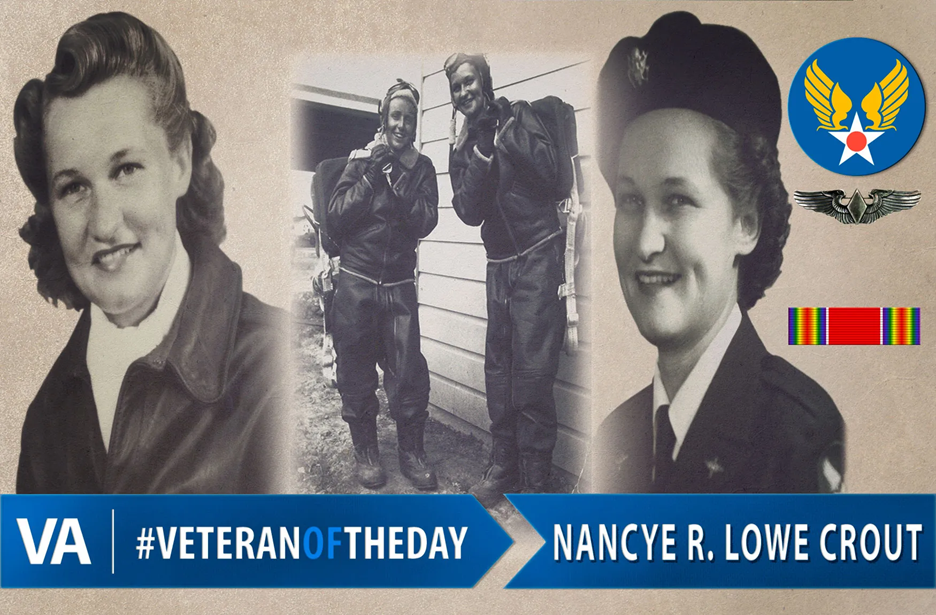
I interviewed the first Amazing WASP, Nancye R. Lowe Crout a petite lady wearing a Navy blue beret who spoke in a calm, expressive, articulate, sweet Texan voice from a typed script that she had prepared.
She read to the audience her adventures in flying and joining the Women Airforce Service Pilots.
“I was a 20-year-old girl in North Texas, and I rode my bike to take a Civilian Pilot Training Program at the expense of the government, at my local college which only accepted 10% women. I received my pilots license and obtained 50 hours of flight training.”
“With flying in my blood and the war escalating I read in the newspaper about the newly formed Women Airforce Service Pilots with the famous aviator Jacqueline Cochrane as director.”
“I was recruited in February,1943 as one of the only 3,000 women in the US that had a pilot’s license.
In the 4th WASP training class, the gals were put up in a Huston hotel room, given $150.00 a month from the US Civil Service Commission. We had to pay for our food and room. Each morning we were taken by bus to the first established WASP Army Base at the Avenger Field training center in Sweetwater Texas.”
“In April 1943, I stayed at the first established barracks for women at Avenger field.
“I graduated and received my silver pinned wings in 8/43 while training on military airplanes. Our job was to ferry over 77 types of military planes from the factories to the 134 army bases for the men to fly into combat.”
My first assignment was to fly a B-34 to Camp Davis, North Carolina and towed
a 30-foot-long muslin aerial target sleeve at the end of 1500 feet of steel cable for the gunnery crew of male army soldiers on the ground who shot off round after round of live ammunition at my target sleeve. This artillery practice at a moving target helped the army men prepared them for use in overseas in the war. Fortunately, I was never hit as several other WASPs were hit in the foot by stray bullets. This was a necessary job but nerve-wracking!”
I was trained to also perform critical non‑combat aviation tasks including learning radio‑control work and I flew drones.
In December 1944 congress deactivated the WASPs as the war was winding down.
The WASPs were considered federal employees, not military personnel, and received no veterans’ benefits. 38 WASPs died in service to the WASPs.
I applied to the Civil Aeronautics Administration in Albuquerque, New Mexico and attended communication school where I met my Bombardier husband who had navigated 35 bombing missions to England.
It took 67 years for the WASPs to be recognized for their WW II service, and I received the Congressional Gold Medal in 2010.
I was young, adventurous and so lucky that I found something I loved: FLYING and this was a means for me to help our country win the war.
A loud, long applause erupted as Nancye Lowe Crout finished her well written account of serving during WW II.
I thanked Nancye for her wonderful speech and mentioned that her brother and niece came from Texas to hear her presentation.
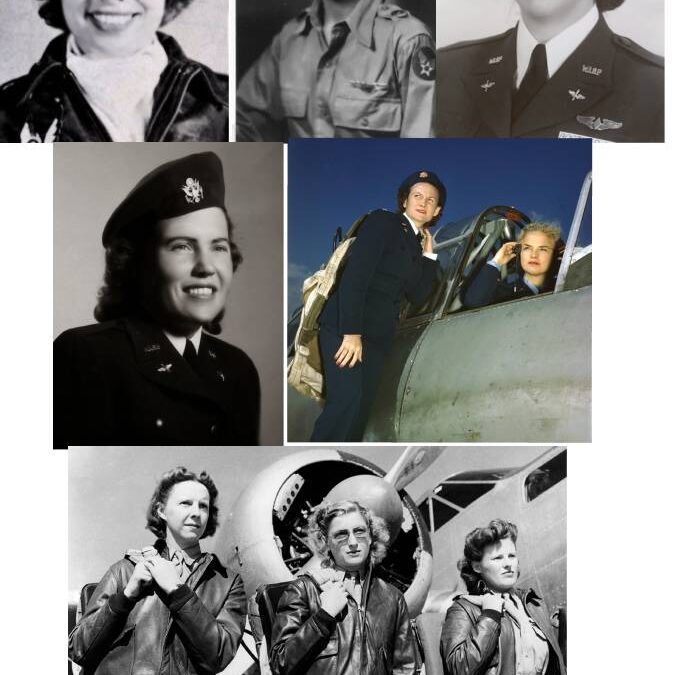
After each WASP presented, I would read a passage from She Flew Bombers that tied into their story and displayed photographs.
Stay tuned for the second WASP, Florence Emig Wheeler, 87 telling her amazing testimony.
To purchase the CD with the complete interviews visit: https://jeaneslone.com/shop/
Saturday, Aug 2, 2025 |
After publishing She Flew Bombers, I joined the small friendly Healdsburg Literary Guild where we discussed events like doing readings at the old Healdsburg Cemetery on different holidays with the public was invited.
At one of our meetings of only ten people, David Beckman, member of the Sonoma County Arts Council, invited me to apply for a grant for their upcoming event.
Much to my surprise I received the grant and was full of excitement and formulated a plan to present the WASPs in a public event.
This was new territory for me I had a BS degree in Health Education and was working to get a MS degree in Marriage, Family counseling. Besides the fact I owned a large Child Care Center license for 44 children and employed six childcare workers. All of this did not educate me in public relations or even public speaking. I knew I would have to learn on my own and was “flying by the seat of my pants”. No one helped me with the planning and the only thing that propelled me was my amazement and love of the WASPs.
Apparently, I seemed to have a personality of determination with an ability to learn and experience serendipitous events that were literally thrown my way!
Former WASP Florence Wheeler had a roster of WASPs that she lent me. There had been 1,078 WASPs that served during WWII.
This roster came from the many reunions that Florence went to in her eighties. It listed all the members of the WASPs that attended. At first, I emailed all the WASPs in all the Western States this proved to be futile as all the emails bounced back or were unanswered. I consulted Florence and she told me that she didn’t email and most of the WASPs just used relatives emails to put on any forms.
I was resolved to find 10 WASPs to attend this public event and called many of the WASPs. Again, many of the phone numbers had been disconnected but I persevered.
Most of women would say to me on the phone, “I would like to go but I can’t drive anymore, and I’ll have to check with my son, daughter, grandchildren or caregiver to bring me up to Northern CA. With each phone call I would smile and think: “You flew bombers and can’t drive?” I reminded myself that the former WASPs were all in their eighties!
Time went by as at last I got the commitment of Six not TEN Wasps to come to the event. I proceeded to pay to rent the Santa Rosa Veteran’s Building on Sept. 12, 2009 from 1-4 PM. I actually had to guess on how many hours this event should be!
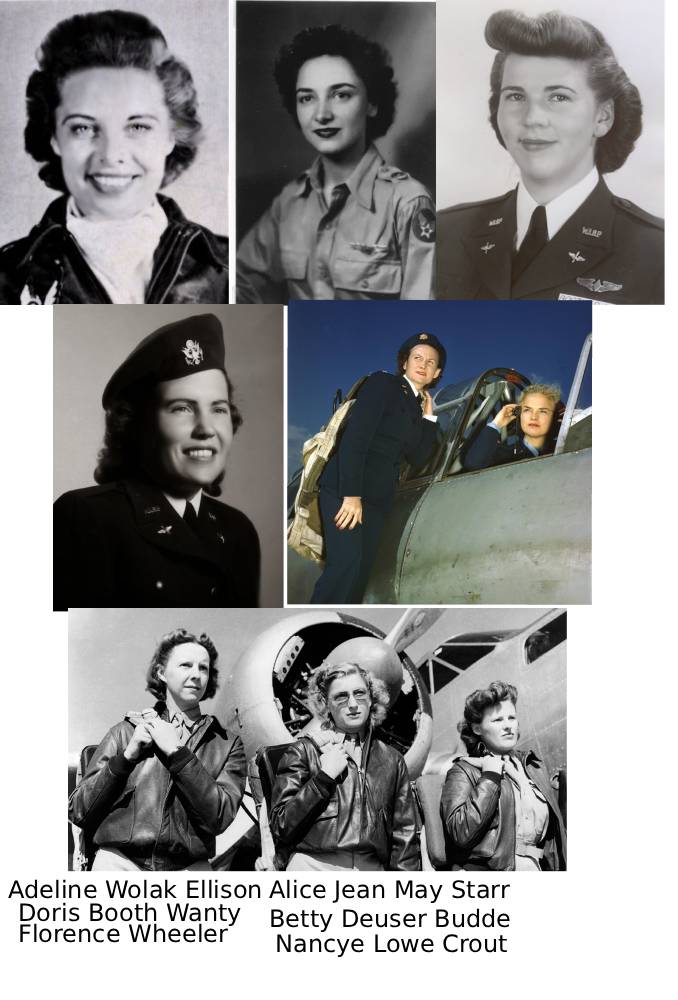
Stay tuned for my next blog about one of the WASPs who told her story about her amazing job in the WASPs. These amazing women ferried over 77 types of aircraft from the factories to over 135 Army bases for the men to fly into combat during WW II.
Monday, Jul 21, 2025 |
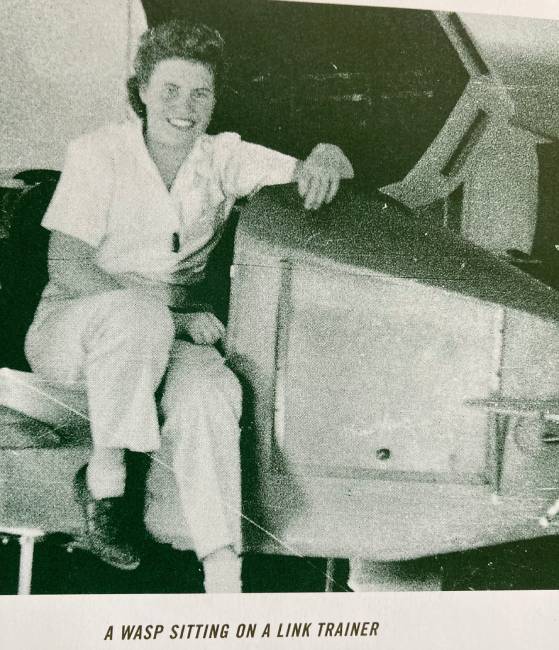
The next week during the editing process of She Flew Bombers, WASP Florence Wheeler brought in a photograph of her proudly sitting atop link trainer that she was qualified to teach and test the required 19 hours of practice to all the WASP gals on the army base.
Passing the test and safely practicing in the link trainer was a qualification before the gals could fly the “biggies” like fighter, bomber, and transport aircraft.
This amazing small box mechanical simulator airplane had stubby little wings and a tail and never left the ground. The training pilot goes inside the link trainer with a covered black hooded canvas that blocks her vision and learns to hunt for the controls by touch only.
The astonishing link trainer (invented in 1920) simulated flying under any harsh conditions teaching a WASP what controls to use.
Instructor WASP Wheeler with a headset on sat at the large map table that was connected to the link trainer by electrical cables or hoses. Florence traced the student’s “flight path” by a mechanical arm or ink plotter from the table. She gave verbal commands to the training pilot who also had earphones on. Wheeler controlled the turbulence, or wind force in any direction and the fuel gauge.
Newbie pilots learned how to navigate the plane’s instruments as Florence gave instructions such as unlock controls, push rudder and thrust stick. The movable base had pumps on it and simulated pitch, roll and yaw of a plane and would tilt and rotate the cockpit. Trusting blindly in the instruments was crucial to learn in emergency situations. Students called it a “claustrophobic torture chamber!”
The amazing link trainer taught safe instrument flying without risking real aircraft, saved fuel and reduced crash risks during training. It prepared thousands of WW II pilots for emergency blind-flying conditions.
During World War II, 38 Women Airforce Service Pilots (WASPs) died in the line of duty while serving their country and were never in combat nor left the United States. The primary cause of death for the pilots was flying over 77 types of aircrafts in which the accidents were caused by mechanical failure, weather-relate crashes, pilot error, mid-air collisions, and training accidents, and ferrying new aircraft from the factories where the planes were often untested! Some women died during takeoffs or landings. Others went down in storms or experienced mechanical failures over remote terrain. Sometimes there were over 50 pilots practicing in one air space!
Cornelias Fort, 24 years old was the first female WASP pilot to die on active duty and perished in a mid-air collision while ferrying an airplane.
Because the female pilots were paid by civil service, the military did not pay for their funeral services and their families had to pay to ship their bodies home.
It wasn’t until 1977 that the U.S. Congress granted the WASPs veteran status. The WASPs were awarded the Congressional Gold Medal for their service.
Florence Wheeler went to Washington, DC with her son to receive the Congressional Gold Medal for her service.
It took until May 20, 2016 to grant the WASPs military status to be buried in Arlington Cemetery.
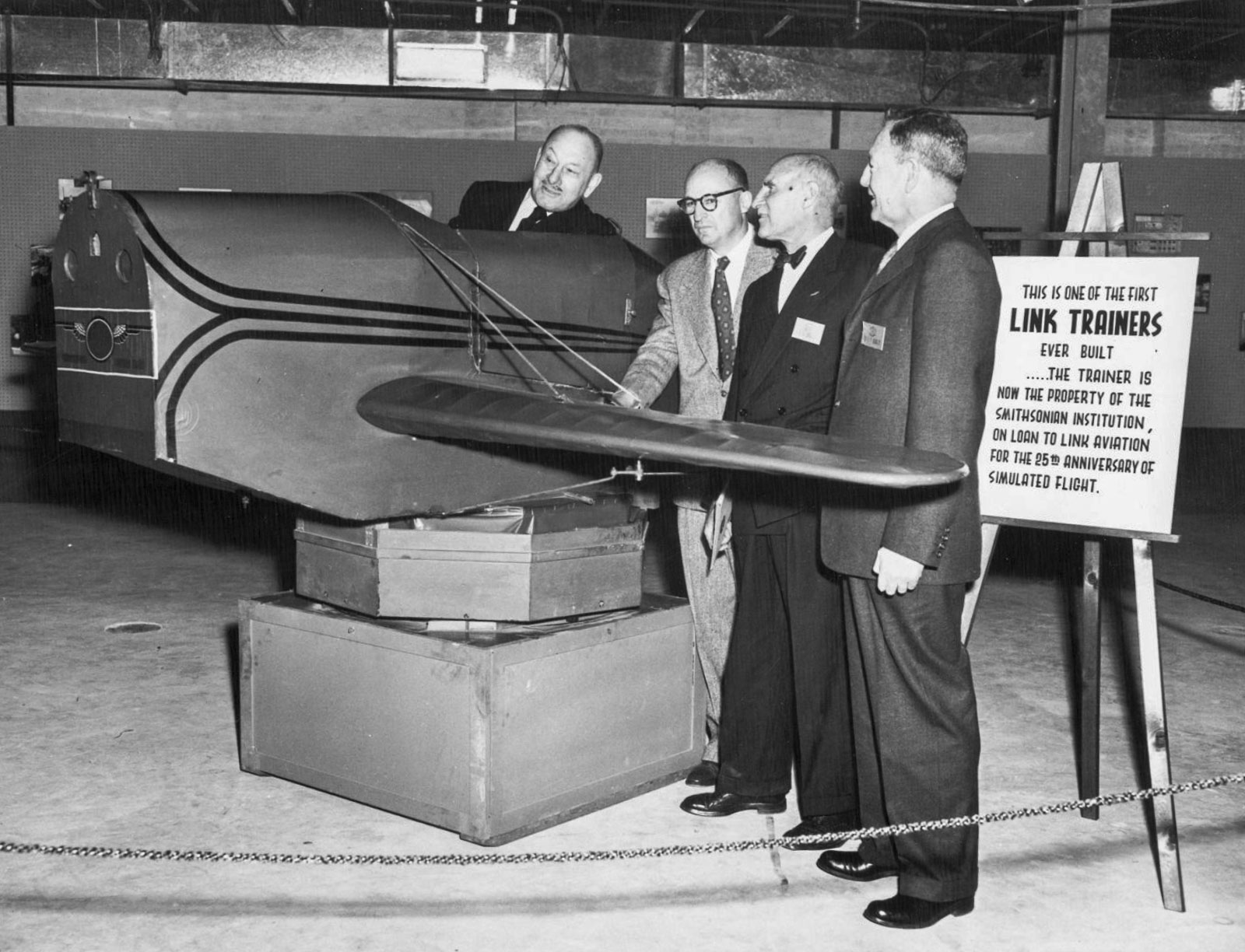
Edwin Albert Link, Jr. (in glasses) with the oldest surviving Link Flight Trainer (serial number 3) on the 25th anniversary of the prototype’s first ‘flight’. This example survives in storage with the Smithsonian’s National Air & Space Museum. (image via Binghamton University Library)

Chanute_Field_Link_Trainers_1943
Thursday, Jul 10, 2025 |
Florence was delighted to edit the manuscript as requested by my editor.
However, she did not know to use a computer, and I had to expensively print out the 252-page manuscript.
Florence, as a former pilot instructor taught and flew many of the World War Two planes during the war to the army bases for the men to fly into combat, so of course she had a personality of a perfectionist.
When she came to my house, she set down the ground rules of the volunteer job of editing. Florence arrived every week like clockwork as she instructed me to make hot cocoa a specific way for her to drink.
She brought her copy of the manuscript that was sprinkled with red circles.
I politely told her I did not need her to edit the entire manuscript just the piloting parts, but Florence quickly dismissed that idea!
I slowly became grateful instead of annoyed for this amazing woman who told me the many fascinating stories of her teaching pilot training at the Sweet Water Springs, Texas army base in 1943. I added many of these stories which enhanced my book.
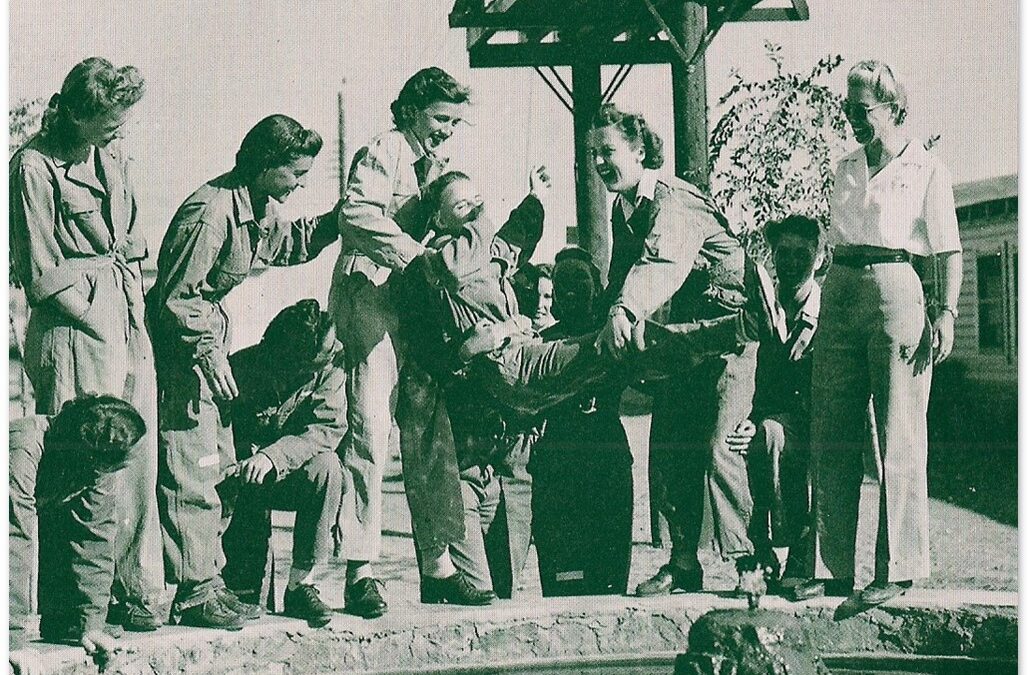
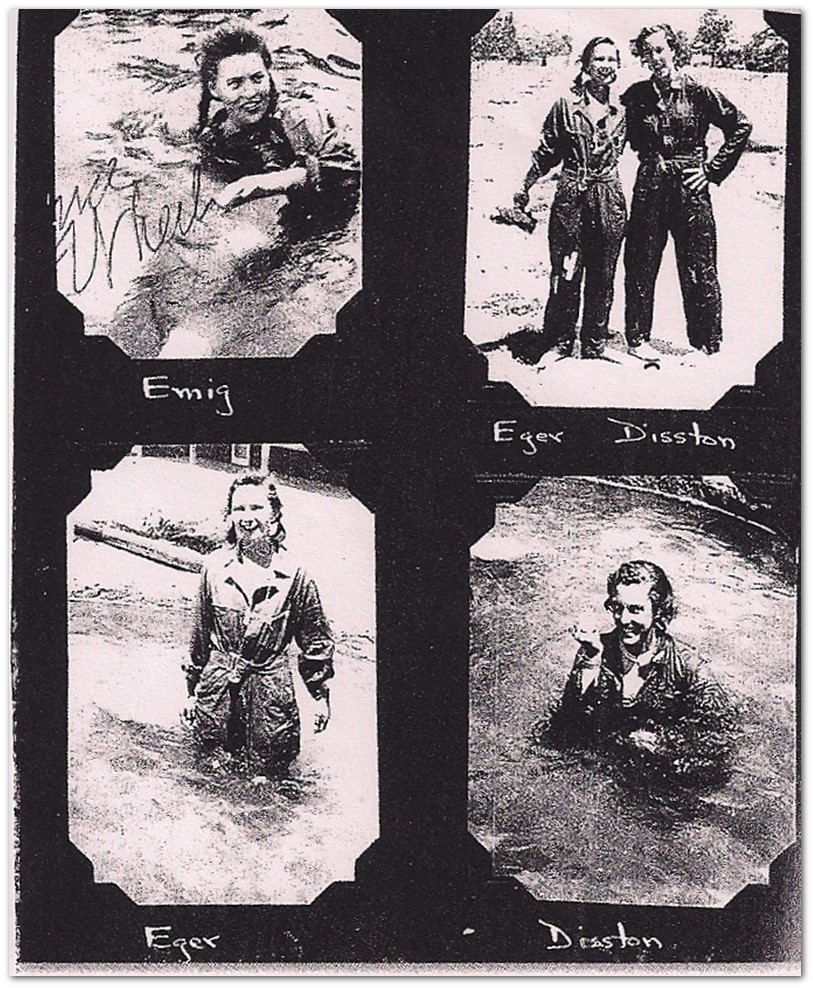
One week she brought over photographs of her being throw into the wishing well which were hilarious!
Before a training pilot went up in a plane for a solo test flight it was a rite of passage to throw in a lucky penny in the large circular wishing well that was in the middle of the Sweetwater Spring army base. If she passed the solo test, her baymates would swing her into the water to retrieve her lucky penny. She would come out soaking wet, a reward in in the sticky humid Texas heat and marvelously satisfied with the accomplishment. I loved looking at the photo of Florence being thrown in with her cute pigtails getting soaked!
Stay tuned for next time: Florence teaching the link trainer, a mechanical simulator that did not leave the ground!