
My interest in research on childcare during WWII grew because I owned and operated a licensed childcare center for 44 children, ranging from 0 (yes, 0 was the number on the license!) to 5 years old, from 1991 to 2007. I hired six staff members and had three separate rooms: Infant, Toddler, and Preschool.
I expected to read that childcare at that time used corporal punishment to make children behave, but I learned something quite different.
****
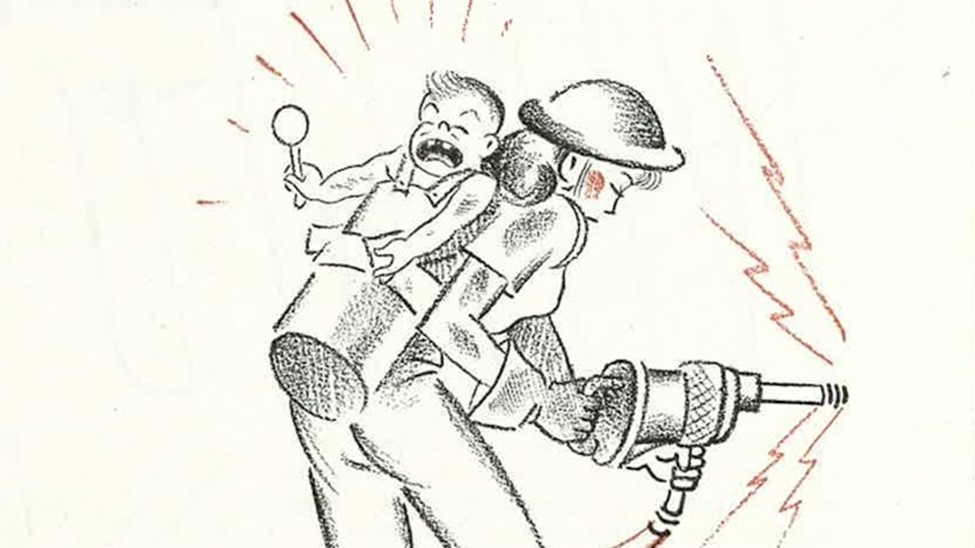
Passage from She Built Ships During WW II
“Good afternoon, I’m Mrs. Stephens, a Victory Visitor.”
“I read about Victory Visitors in the magazine, Ladies’ Home Companion. I’d like to help with the war effort, but I have two young children, and my husband is in the Navy. Besides, my mother used to tell me that the first duty of a mother is to stay with her children,” Lolly exclaimed.
“With most of our men away, our country is facing many difficulties trying to produce all that is needed to win this war,” Mrs. Stephens persisted. “There are evening welding classes at the local high school. You can practice, get a certificate, and a job at the shipyards.”
“At night?” A worry line creased between Lolly’s eyebrows.
“I know a retired teacher who lives down the street and watches children. Just think, you can make $1.20 an hour when you pass!” Mrs. Stephens raised her voice an octave higher.
“That much? I’m barely scraping by with the pittance Joe sent me since I never know when it will arrive.”
****
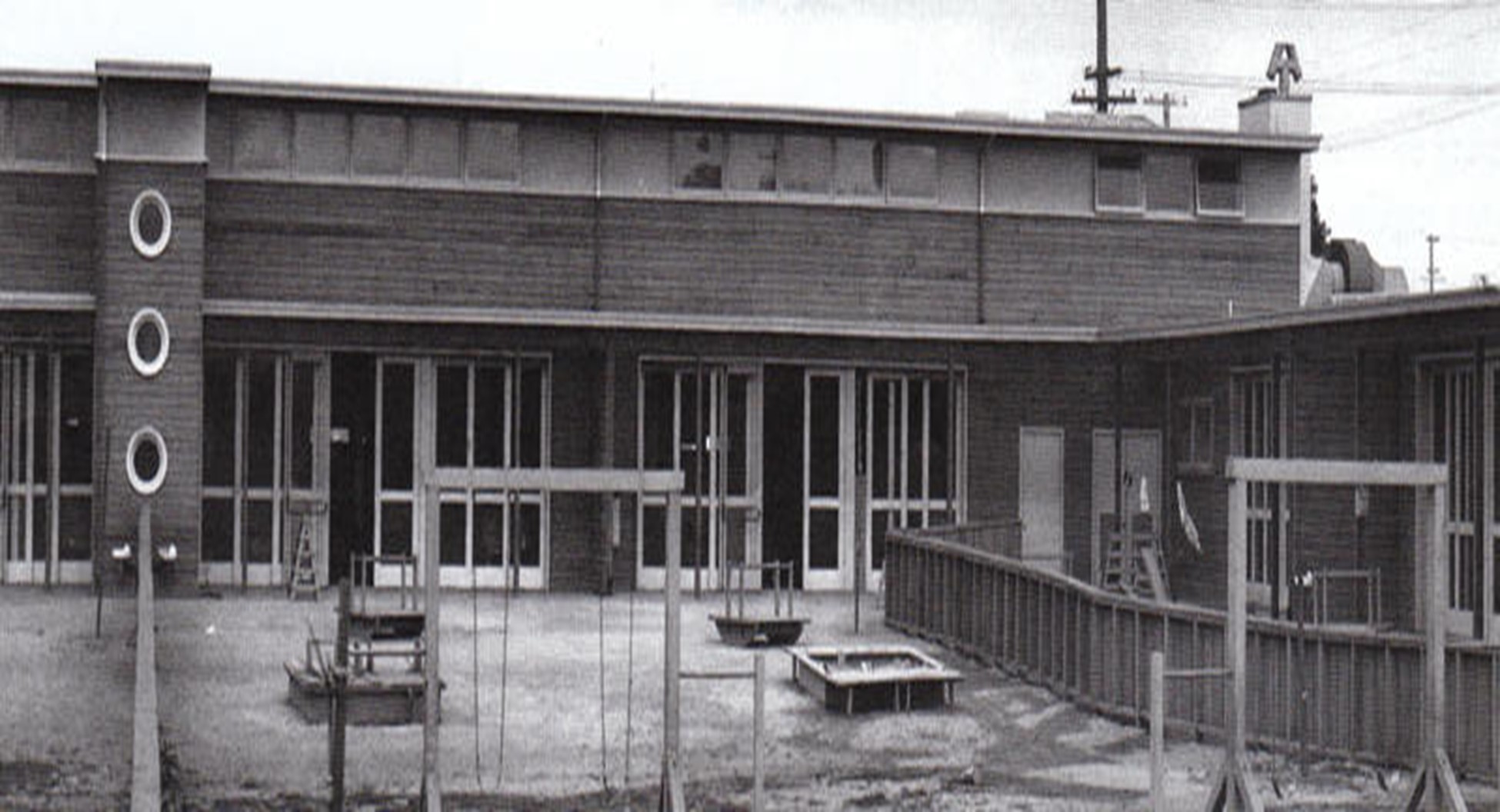
The 1943 Maritime Child Development Center, Richmond, CA
In June 1943, the U.S. Senate passed a bill and $20,000.000 was funded for the first and only universal childcare program to date!
****
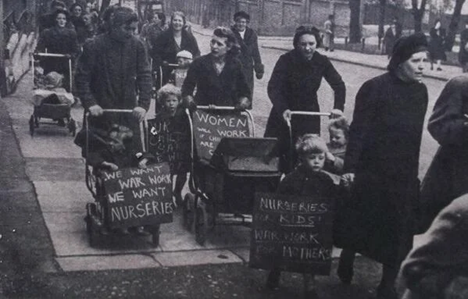
Mothers in Hampstead, England, marching for the opening of more Day Nurseries, 1943
****
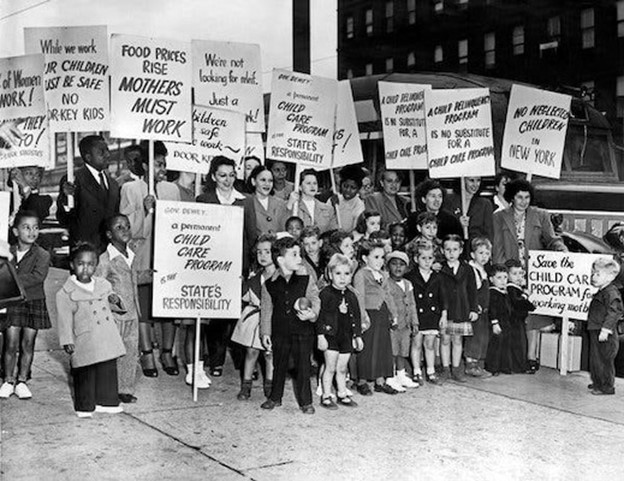
New York mothers protesting for more childcare during World War II
****

In January 1946, servicemen returned home and took over jobs from women, ending universal childcare.