
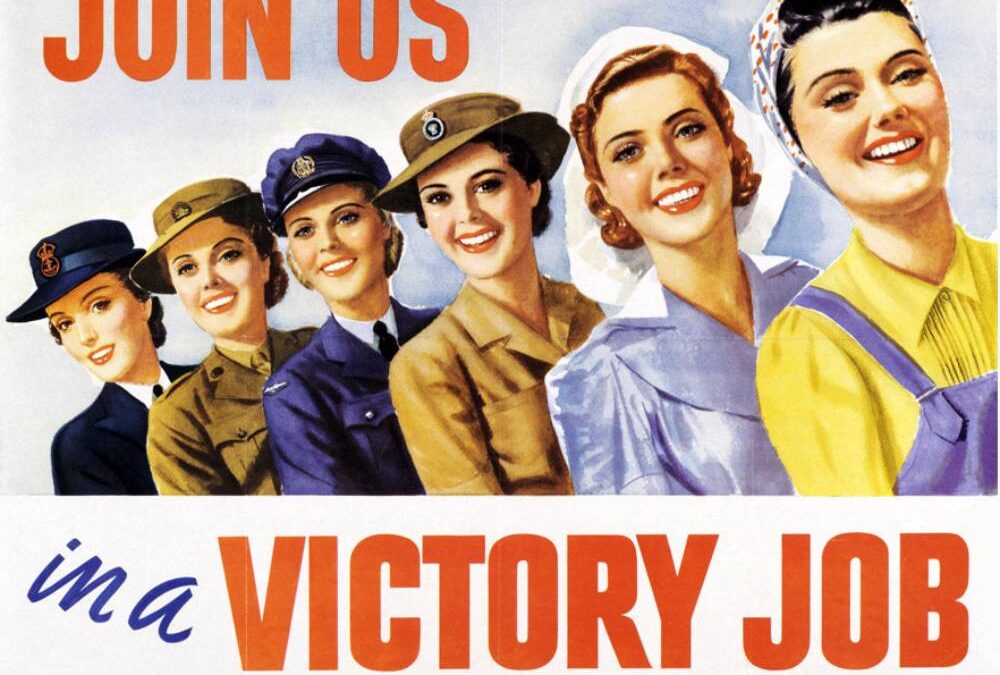
These incredible volunteer women have been overlooked and forgotten.
Have you ever heard of them?
They went door-to-door in Richmond, CA, and other states and neighborhoods, and played a crucial role in recruiting “ordinary” housewives to help win the war effort during World War II.
Women were needed to support the massive shipbuilding effort at the California Kaiser Richmond Shipyards.
Victory Visitors single-handedly explained to housewives the urgent need for workers in the shipyards, factories, and offices.
Most of the housewives had husbands who were already serving in the military. This personal contact approach was powerful because it made women feel directly needed and part of the national effort.
The Victory Visitors framed employment as a patriotic duty rather than just a job.
They would say, “Your hands can help build the ships that will bring our boys home; you are needed to do your part to help win this war.” This personal contact approach was powerful because it made women feel directly needed and part of the national effort.
The Victory Visitors offered information about bus routes, carpools, and training programs at vocational schools. They explained the many federally funded childcare facilities where children would be safe and well cared for while their mothers worked.
The personal approach of the Victory Visitors shared the stories of housewives who became welders, riveters, and shipfitters, helping break down fear or hesitation about doing factory work.
The Victory Visitors made women feel confident, valuable, and involved.
Victory Visitors distributed flyers and posters showing confident women at work with slogans like “Women in War Jobs—We Can’t Win Without Them!” These materials, often produced by the War Manpower Commission, reinforced their in-person visits.
At the height of the war (1943–44), the Victory Visitors’ campaign helped the female workforce grow dramatically—women made up nearly one-third of the Kaiser Shipyard labor force, including thousands of former housewives.
Weren’t they amazing?
Please follow this blog and comment! I love reading comments!
Stay tuned for the next blog, Childcare during WW II.